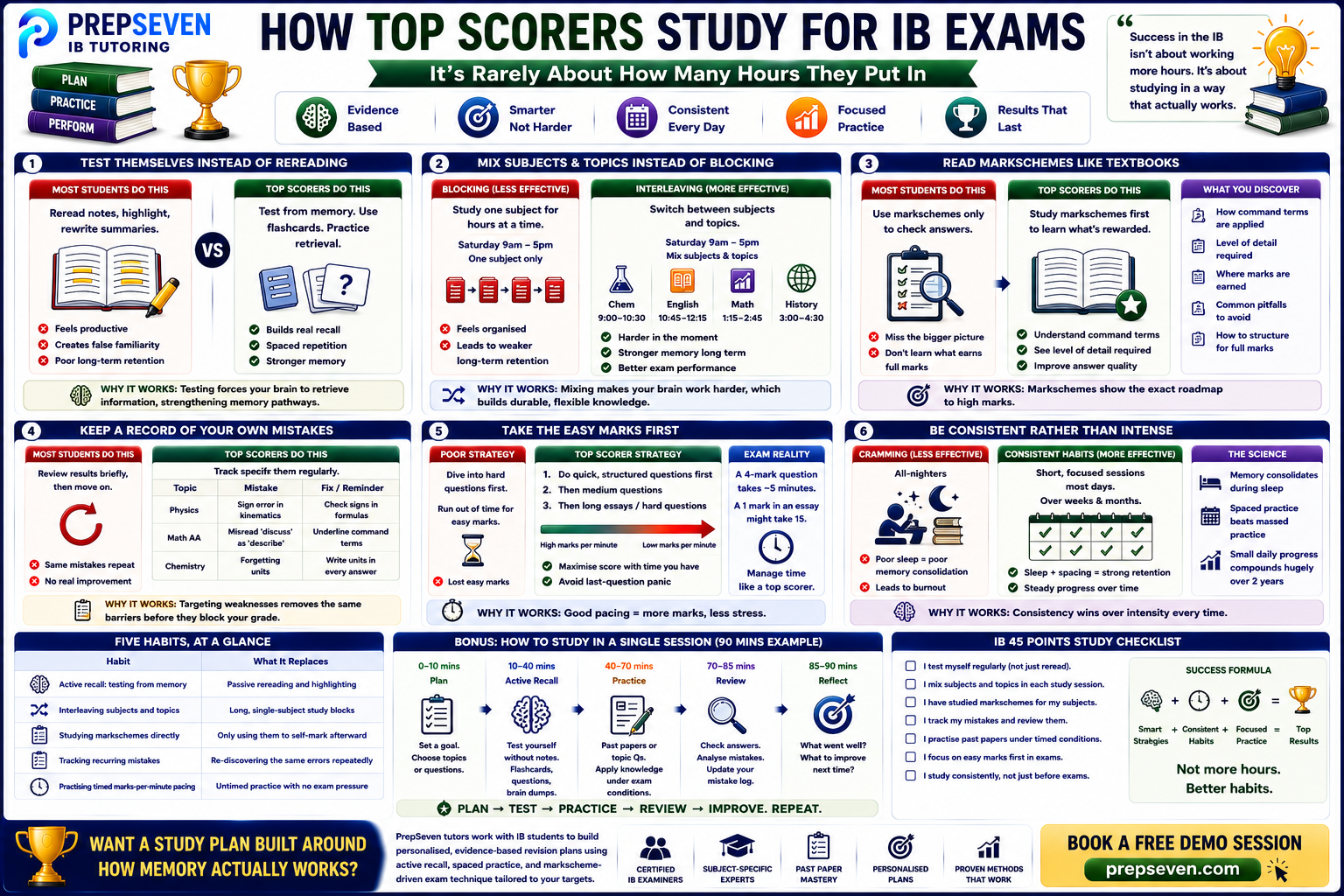
What to Look For, How It Works, and How to Choose the Right Tutor for the IB Diploma
Why Online IB Tutoring Has Become the Default Choice for IB Families
The IB Diploma is taught in roughly the same way by syllabus, but rarely by quality of subject delivery, in over 150 countries, and the gap between a school with a strong HL Physics teacher and a school where that teacher left mid-year is enormous. Online tutoring exists because the IB is a globally distributed curriculum but specialist expertise is not evenly distributed at all. A family in a small international school with one overworked Economics teacher can now access the same calibre of subject specialist as a family at a large, well-resourced school, simply by going online.
The shift has also been driven by what IB assessment actually demands. IB exams are not testing recall in the way many national curricula do. They test the ability to apply command terms precisely, structure an extended response against a markscheme, and produce IA and Extended Essay work that meets specific, technical assessment criteria. A generalist tutor without direct IB experience can help with content, but is far less useful for the assessment literacy that separates a 5 from a 7. Online tutoring makes it possible to access tutors who specialise specifically in IB assessment, including former examiners, regardless of where a family is based.
This guide explains what effective online IB tutoring actually involves, what it can and cannot realistically do, how a well-structured tutoring relationship should be organised across the two years of the Diploma, and what to look for, and avoid, when choosing a tutor or platform.
The biggest misconception about online IB tutoring is that it is simply in-person tutoring delivered over video. Done well, it is structured differently: sessions are built around the specific subject guide and command terms for that course, progress is tracked against the actual grade descriptors a student is being assessed on, and the diagnostic work that identifies whether a student’s gap is content, method, or exam technique happens before a study plan is built, not after.
What Good Online IB Tutoring Actually Looks Like: A Component Breakdown
Not all online IB tutoring is built the same way, and the difference between a tutor who genuinely moves a grade and one who simply explains content again rarely shows up until several sessions in. Knowing what to look for from the start makes that difference visible much earlier.
Component
What It Should Include
Common Shortfalls
What to Look For
Subject and Syllabus Expertise
Direct familiarity with the current subject guide, including recent syllabus changes, and ideally examining or markscheme experience
Tutors who teach the subject generally but are unfamiliar with the specific IB syllabus version a student is following, including SL and HL distinctions
Ask whether the tutor has taught or examined the current syllabus specifically, not just the subject in general
Curriculum and Assessment Alignment
Sessions structured around the actual paper formats, command terms, and assessment criteria the student will face
Generic explanation of content without connecting it to how the IB actually assesses it, leaving students who understand the topic but still lose marks on structure
Confirm that practice work is marked against real IB markschemes and grade descriptors, not just checked for correctness
Session Structure and Diagnostics
An initial diagnostic that identifies whether the gap is content knowledge, method, or exam technique, followed by a plan targeting that specific gap
Ad hoc sessions that simply work through whatever the student brings that week, with no underlying plan tracking progress against specific weaknesses
Ask what the diagnostic process looks like before committing, and whether there is a documented plan that gets revisited and adjusted
Technology, Resources, and Past Paper Access
A shared digital whiteboard, access to genuine past papers and markschemes, and ideally recorded sessions for later review
Sessions conducted with no shared visual workspace, making mathematics and diagram-heavy subjects especially difficult to teach effectively online
Confirm the platform supports real-time collaborative work, not just a video call with verbal explanation
Progress Tracking and Parent Communication
Regular, specific updates on what has been covered, what has improved, and what still needs work, tied to actual assessment evidence
Vague verbal reassurance with no documented record of progress that a parent or the student can refer back to
Ask how progress is reported, how often, and whether updates reference specific grade or mark improvements rather than general impressions
What Online IB Tutoring Can Help With: Coverage Across the Diploma
Online IB tutoring is not limited to subject content. The Diploma has several distinct components, each with its own assessment criteria, and effective tutoring support looks different for each one.
Area
What Tutoring Should Target
Why It Matters
Subject Content, SL and HL
Building genuine conceptual understanding and calculation or analytical fluency across all six subject groups, matched to the exact syllabus content and command terms used in that subject
Content gaps compound over two years, and subject-specific tutoring closes them before they affect mock and final exam performance
Internal Assessment Guidance
Helping a student choose a viable research question, structure the investigation correctly, and meet the specific criteria, such as Personal Engagement, Exploration, Analysis, and Evaluation, that the IA is graded against
IA grades contribute directly to the final subject grade, and many students lose marks not from weak work but from work that does not address the assessment criteria explicitly
Extended Essay Supervision Support
Structuring the research question, building an argument-led essay rather than a descriptive one, and ensuring referencing and academic conventions meet IB standards
The EE contributes up to three bonus diploma points alongside TOK, and a poorly structured essay can undermine months of genuine research effort
Theory of Knowledge
Developing the kind of cross-disciplinary, evidence-based argumentation TOK essays and presentations require, distinct from subject-specific content knowledge
TOK is unfamiliar territory for most students, since no other part of their education asks them to compare ways of knowing across disciplines explicitly
Exam Technique and Past Paper Practice
Timed practice under realistic conditions, followed by detailed review against markschemes to identify recurring, correctable error patterns
Many students who understand the content still lose marks to poor time management, command term misreading, or weak answer structure under exam pressure
Predicted Grade Improvement
Targeted preparation for the specific assessments, mocks, IA milestones, classroom tests, that feed into a teacher’s predicted grade decision
Predicted grades are set well before final exams and matter enormously for university offers, making evidence-focused tutoring in the lead-up especially valuable
Families often start tutoring focused narrowly on subject content and discover partway through that the IA, the EE, or exam technique was the actual bottleneck. A genuinely useful tutor or platform will identify this early through proper diagnosis, rather than continuing to drill content a student has already understood while the real gap goes unaddressed.
How a Well-Structured Online Tutoring Relationship Should Run
Stage One: Diagnostic Assessment
Before any teaching happens, a good tutor should establish exactly where a student stands: which topics are genuinely weak, whether errors are conceptual or procedural, and how the student currently performs under timed conditions compared to untimed work. This typically involves a short diagnostic assessment and a review of recent school grades, mock results, or IA drafts if available. Skipping this step means the first several sessions are effectively guesswork.
Stage Two: A Personalised, Evidence-Based Plan
The diagnostic should produce a specific plan, not a general intention to cover the syllabus. A strong plan names the topics or skills being targeted, the order they will be addressed in, and how progress will be measured, typically through periodic timed practice and topic-specific review. This plan should be shared with the student and, where relevant, the parent, so progress can be tracked against it rather than against a vague sense of improvement.
Stage Three: Structured Weekly Sessions
Effective sessions tend to follow a consistent rhythm: review of the previous week’s practice, focused teaching or problem-solving on the current target area, and new practice set for the week ahead with a clear connection to upcoming school assessments. Sessions that wander without this structure, however knowledgeable the tutor, are far less efficient at closing specific gaps.
Stage Four: Mock and Predicted Grade Alignment
As mock exam periods approach, tutoring should shift toward full timed practice and detailed markscheme review, deliberately timed to support the checkpoints that feed into predicted grades. A tutor who is aware of when a student’s school sets mocks and predicted grades can align preparation to have maximum effect exactly when it matters most.
Stage Five: Ongoing Review and Adjustment
A tutoring plan that never changes is a sign the diagnostic process has stalled. As gaps close, the plan should shift toward new priorities, and as new gaps appear, often revealed by a mock result or an IA draft, the plan should be updated to reflect them. The two-year span of the Diploma is long enough that a static plan from October of Year 1 is unlikely to still be the right priority list by March of Year 2.
Three Things That Separate Effective Online Tutoring from Ineffective Tutoring
Specificity: Mapping Directly Onto IB Assessment
The most useful tutoring is specific to how the IB actually assesses a subject, not generic subject teaching delivered over video. A tutor who marks practice work against the real grade descriptors, who knows the difference between what Paper 1 and Paper 2 demand, and who can explain exactly why a particular answer lost marks against the markscheme, produces faster improvement than one who simply re-teaches content in a different way.
Diagnostic Precision: Knowing What Is Actually Wrong
A student who is losing marks because they misunderstand a concept needs different help than one who understands the concept but cannot structure an answer under time pressure. Effective tutoring identifies which of these is actually happening before deciding how to spend session time, rather than assuming more content coverage will fix every kind of gap.
Online tutoring that only activates before a mock or final exam tends to produce short-term familiarity rather than durable understanding. Consistent, regularly scheduled sessions across the term, tied to a documented plan, allow gaps to be closed properly and give a tutor enough visibility into a student’s pattern of performance to notice trends a single cramming session never would.
Questions to Ask Before Choosing an Online IB Tutor
Question
Why It Matters
What a Good Answer Looks Like
Do you teach or examine the current version of this subject’s syllabus?
IB syllabuses are revised periodically, and a tutor working from an outdated version can teach content or assessment structures that no longer match the exam
A specific, confident answer naming the current syllabus and first-assessment year, not a general claim of IB experience
How will you diagnose what is actually holding my grade back?
Without a genuine diagnostic process, tutoring risks reinforcing strengths the student already has rather than addressing the actual gap
A described process involving a diagnostic assessment, review of recent grades or mock results, and a resulting specific plan
Can you support IA, EE, or TOK work, not just exam content?
Many students need support across more than one component, and not every tutor or platform covers IA, EE, and TOK with the same depth as exam content
Clear confirmation of which components are covered, with specific examples of how that support is structured
How is progress tracked and communicated?
Vague reassurance is not useful evidence that tutoring is working, particularly for a service being paid for over months
A described reporting process with specific, evidenced updates, ideally tied to measurable grade or mark improvements
What does a typical session actually involve?
The difference between structured, plan-driven sessions and reactive, ad hoc ones is the single biggest predictor of how much a student improves
A clear description of session structure: review, focused teaching, and forward-looking practice, rather than an open-ended description
Common Mistakes Families Make When Choosing Online IB Tutoring
Mistake
Why It Fails
What to Do Instead
Choosing a tutor based on general subject knowledge alone
Strong subject knowledge does not automatically translate into IB-specific assessment expertise, and students can lose marks despite genuinely understanding the content
Specifically confirm IB syllabus and assessment familiarity, ideally including examining or markscheme experience, before committing
Starting tutoring only in the final term before exams
Many of the gaps that affect final grades, weak IA work, inconsistent mock performance, accumulated content gaps, are far easier to close with months of lead time than weeks
Begin tutoring early enough to influence predicted grades and IA outcomes, not just final exam revision
Skipping the diagnostic stage to start content review immediately
Without a clear picture of what is actually causing lost marks, tutoring time risks being spent on the wrong priorities
Insist on a proper diagnostic assessment before agreeing to a long-term tutoring plan, even if it adds a session at the start
Treating sessions as content review only, ignoring IA, EE, or exam technique
A student can be strong on content and still underperform significantly due to weak IA structure, poor time management, or command term misreading
Ask explicitly whether IA, EE, and exam technique are part of the tutoring scope, not just subject content
Allowing inconsistent or infrequent scheduling
Irregular sessions make it difficult for a tutor to track a student’s trajectory or build on previous progress effectively
Commit to a consistent weekly schedule wherever possible, treating tutoring as a structured part of the student’s routine rather than an occasional top-up
Not reviewing progress against the original plan
Without checking back against specific goals, it is difficult to know whether tutoring is actually working or simply feels productive
Schedule periodic check-ins where progress is measured against the original diagnostic and plan, with adjustments made as needed
Looking for IB tutoring built around how the IB actually assesses?
PrepSeven tutors are certified IB examiners who build a diagnostic, evidence-based plan for every student, covering subject content, IA, EE, TOK, and exam technique across the full two years of the Diploma.