Primary Years Programme
The Primary Years Programme (PYP) is a globally recognized curricular framework aimed at helping children aged 3-12 develop their minds. Inquiry-based learning at the center of the PYP provides opportunities for students to learn through inquiries, understand concepts, and grow physically, socially, and emotionally instead of just by memory. PYP provides a counter-balance to traditional early childhood education models by fostering students who are competent learners, thinkers, and globally conscious citizens.
Traditional learning paradigms such as separate subject areas expect students to learn in isolation; however, PYP supports the idea of learning through units of inquiry. This type of learning enables students to explore an issue from different points of view and develop a deep understanding of the subject matter while creating a connection of what they are learning in the classroom with things they see in their real world. The concept of purposeful, internationally minded learning through inquiry is aligned with the values reflected at PrepSeven.
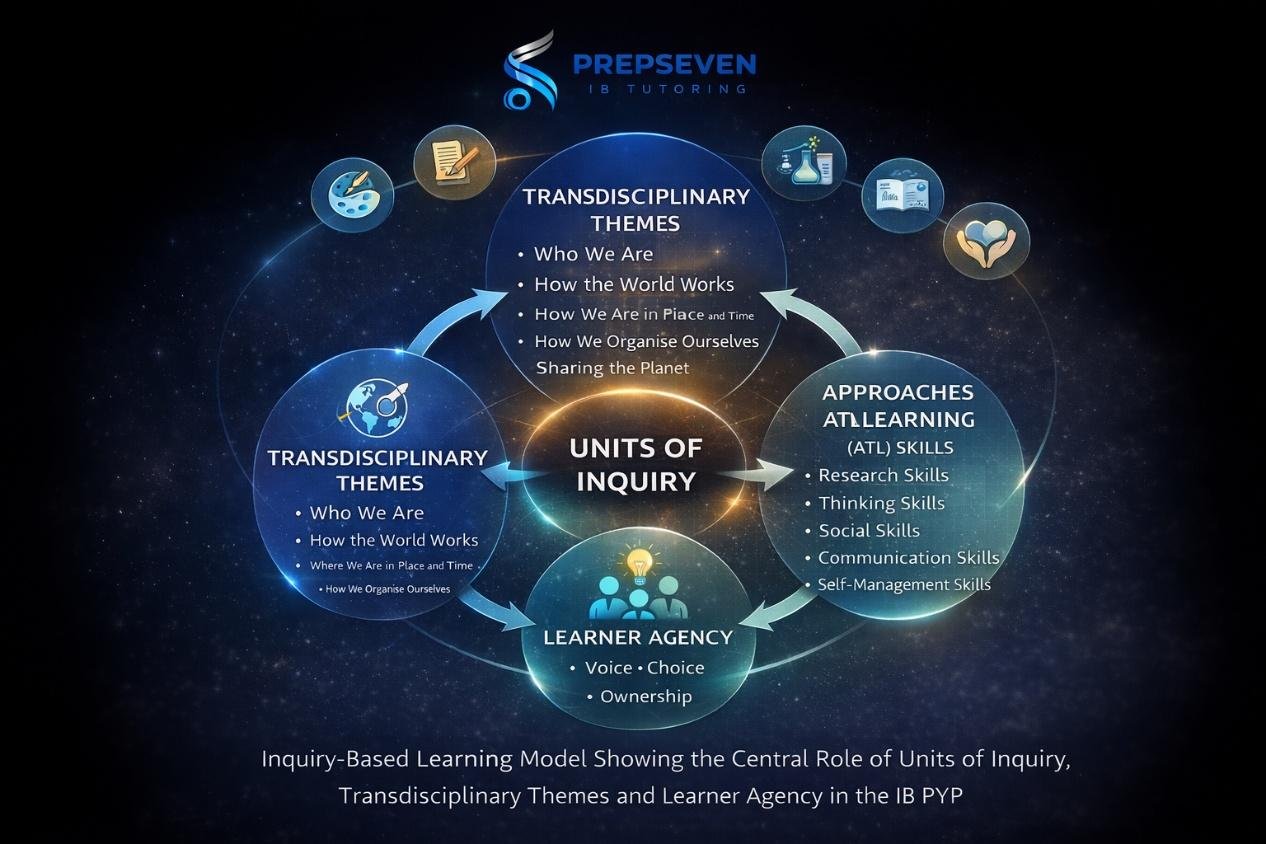
The philosophy of PYP is based on the idea of developing the whole child. Although basic literacy and numeracy skills are essential, equal emphasis is given to creative expression and social and emotional learning and dispositions. This approach of developing the whole child allows students not only to “know” but also to “understand,” “apply,” and “reflect.” This translates into a classroom environment where there is a lot of rich questioning, collaborative conversations, and interactions that encourage students to take ownership of learning.
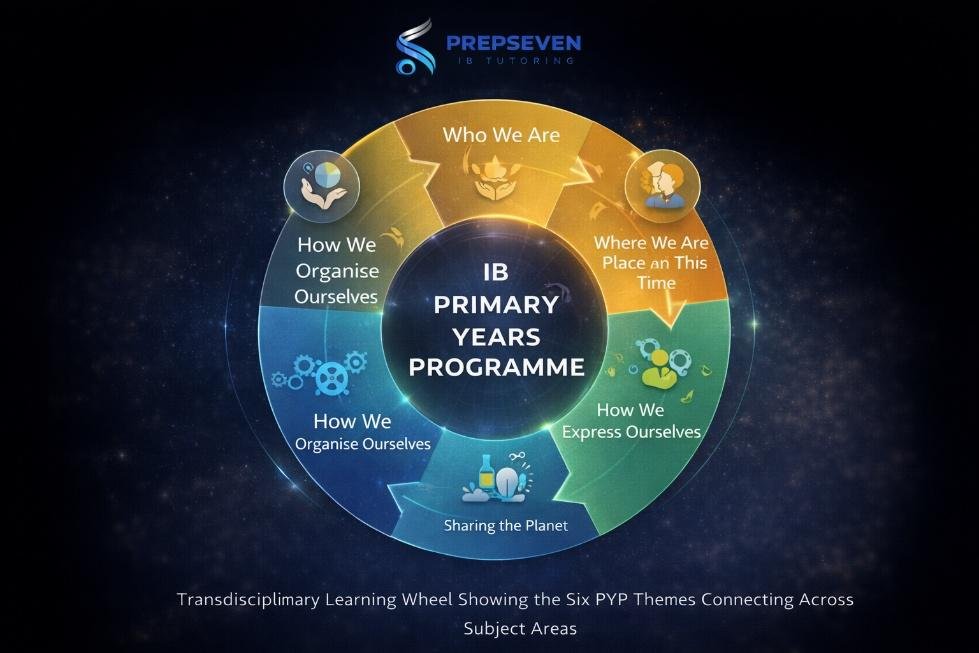
At the heart of the PYP are six transdisciplinary themes, which serve as conceptual umbrellas under which learning experiences are organized. The themes are broad enough to encompass a range of subjects and rich enough to encourage inquiry into significant questions in the real world. The attempt is to make learning meaningful by providing context, so that students can look beyond the content and delve into concepts and questions that are significant and meaningful to them.
Each of these themes becomes a window for exploring the essential concepts that guide the student inquiry. The framework helps students develop the ability to use critical thinking skills in all areas and subjects, rather than fragmenting the curriculum into isolated areas of study.
Aside from the thematic approach, the PYP also focuses on the importance of transdisciplinary learning, which means that the lines dividing subjects are blurred and the learning process is focused on real-world issues or problems, rather than the subject matter under study. The transdisciplinary nature of the PYP helps students develop a deeper understanding and the capacity to apply knowledge and skills to new and different situations, which is the hallmark of future-focused education.
The concept of assessment in the PYP is not just about evaluating student understanding in terms of content knowledge, but also about using this process to help guide our teaching and learning, and to capture student learning in terms of their understanding, communication, self-management, social skills, and research abilities. Teachers make use of a range of both formative and summative assessment practices, such as observations, self-reflection, exhibitions, portfolios, and performance tasks.
PrepSeven’s approach is very similar to this formative approach, which is not just concerned with what the children know, but how they think, how they apply what they know, and how they develop as independent learners.
A unique aspect of the PYP is the PYP Exhibition, which is usually undertaken in the final year of the programme. In this project, children work collaboratively or individually to identify an issue in the real world, undertake in-depth inquiry, synthesize what they have learned, and communicate their findings to an audience.
Assessment in the PYP emphasises student voice and choice, with learners actively engaging in setting goals, reflecting on progress and sharing insights about their learning journey. This empowerment helps cultivate dispositions such as self-efficacy, independence, resilience and competencies that PrepSeven actively reinforces in all of its early academic development programmes.
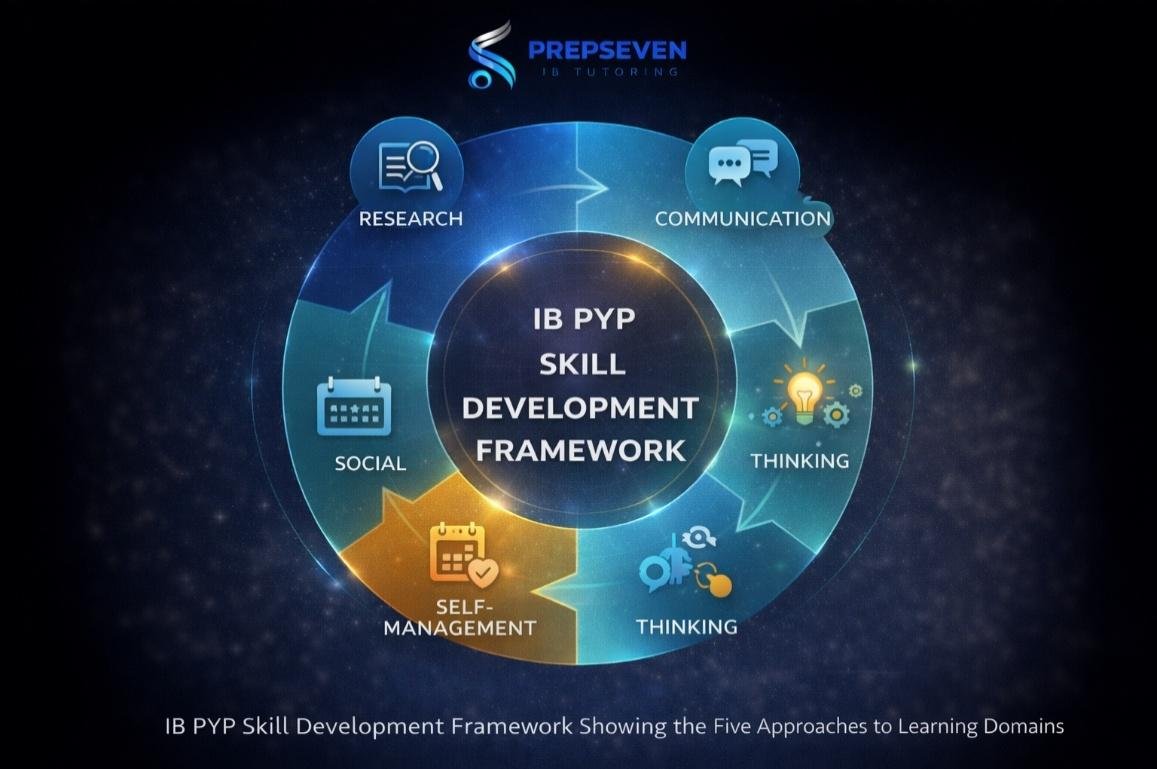
At the core of PYP is the development of Approaches to Learning (ATL) skills, which include research, communication, social, thinking, and self-management skills. These are intentionally integrated throughout classroom activities and learning targets, and they enable young learners to develop a foundation for learning, collaboration, and inquiry.
In reality, a classroom in a PYP school is a dynamic and exciting place where students are involved in cycles of inquiry, ask questions, work together with peers, and think and construct meaning through engagement with learning experiences. The role of the teacher is that of a facilitator of the learning process.
Similarly, parents and caregivers also have a role to play in the PYP ecosystem. Home-school partnerships are developed, and parents are encouraged to be involved in the learning process of their children and understand their progress as well.
The Primary Years Programme is a philosophy of education that is not bound by the curriculum it teaches but is focused on enabling students to understand themselves and the world around them in a deep and meaningful way. It is a philosophy of education for a complex world in the 21st century, in which flexibility, critical thinking, and intercultural understanding are of paramount importance.
At PrepSeven, we share this vision of education and strive to support our students and families through a structured and inquiry-based approach to learning.